
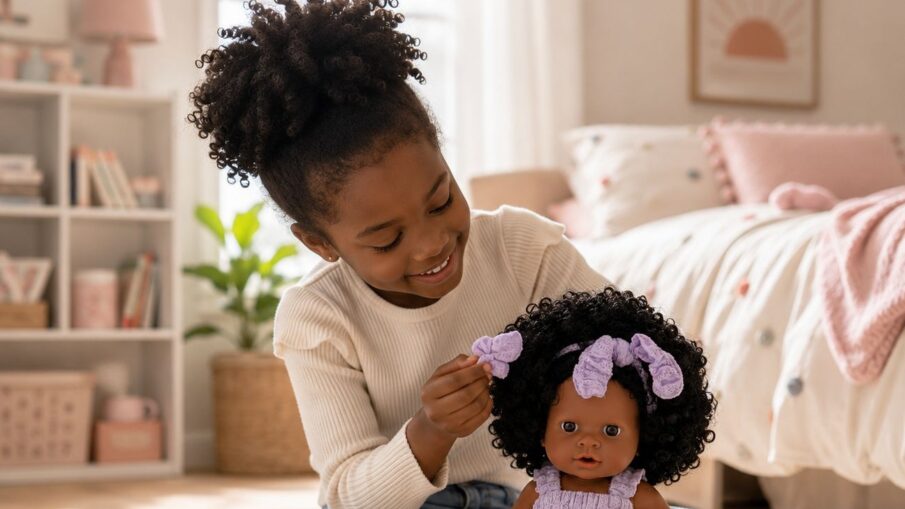
Prima Toys, one of South Africa’s leading toy companies, has launched ZAZI, a proudly South African-developed doll brand inspired by the children who will play with it.
Walk down the doll aisle in many South African toy stores and you’ll find plenty of choice, but much of it is still influenced by European and American beauty ideals. Even dolls with darker skin tones are often based on designs originally created around straight hair and predominantly European features.
For Prima Toys, which has spent decades in the South African toy industry, this raised the important question of why aren’t there more dolls that celebrate the natural beauty of South African children with the same attention to design and quality as leading international brands?
A gap worth addressing
The team also noticed that dolls reflecting African features were often found at the lower-priced end of the market, something Prima Toys felt was worth challenging.
“As a leading toy business in South Africa, we saw it as our responsibility to challenge that thinking with a high-quality product supported by a strong, locally relevant brand,” says Paul Cook, CEO of Prima Toy and Leisure Trading.
“South African children have a wonderful diversity of skin tones, facial features and hair textures, yet this is not always reflected meaningfully in the dolls available to them. We wanted ZAZI to celebrate natural hair and local identity in a joyful and aspirational way.”
The idea was to develop a doll with these features considered from the very beginning, rather than adapting an existing international design. Hair became a particular focus because brushing and styling are such an important part of how children traditionally play with dolls.
Getting the details right
Bringing ZAZI to life took many months of development, with numerous samples and refinements along the way. The Prima Toys team worked closely with its manufacturing partner in China, particularly on achieving the right hair textures and braided styles.
“Teaching the factory how to create the braids was one of the greatest technical challenges. Each braid is completed by hand, making the hair an especially detailed part of the finished doll.”
The ZAZI Deluxe Doll is made from premium-quality vinyl, with soft facial features and carefully developed hair that children can braid and style. Her outfits are attractive but understated, allowing the hair to remain the star of the show.
The company has also introduced ZAZI & Friends, a smaller range with bold colour-streaked hairstyles, bright outfits and individual personalities. These dolls are designed around friendship and collectability, giving children another way to enjoy the ZAZI world.
Together, the two ranges give Prima Toys room to explore different characters and future additions to the brand.
A proudly South African story
Prima Toys has a long history with dolls, having previously produced the popular Baby Love and Baby Angel brands in South Africa. Although local production facilities closed some years ago, the experience gained through those brands has helped shape the thinking behind ZAZI.
The name itself is inspired by ukuzazi, meaning “to know oneself”. The team wanted something unmistakably South African without tying the doll to one particular cultural identity.
“The name captured exactly what we wanted the brand to express. Know yourself, celebrate yourself and be proud of who you are,” explains Cook. “That meaning has become the emotional foundation of the ZAZI brand.”
The team also wanted to make sure that the message never got in the way of what matters to children, which is having a doll they genuinely love playing with.
The future of diversity in play
With ZAZI Deluxe Doll and ZAZI & Friends now available through leading toy specialists and selected online retailers, Prima Toys hopes to build on the launch with additional characters and products as the brand grows.
Future plans will be guided by how children and families respond to the initial ranges, but Cook believes ZAZI has the potential to become a familiar name in South African homes.
“We wanted to create a desirable, good-quality play doll in the first instance,” he concludes. “Confidence and representation are woven into that experience, but they never replace the essential ingredients of fun, imagination and play.”